

0.5ct, 1ct or 2ct? Understanding What Diamond Carat Really Looks Like
Half a carat. One carat. Two carats. On paper, the progression sounds straightforward. You might naturally assume that a two-carat diamond simply looks twice as large as a one-carat stone.
Diamonds are not quite that simple.
Carat measures weight rather than the visible dimensions of a diamond, which means the number attached to a stone only tells part of the story. Cut, shape, proportions and even the design of the ring can all influence how large a diamond appears once it is on the finger.
First, What Does Carat Actually Measure?
A carat is a unit of weight used for diamonds and other gemstones. One carat equals 200 milligrams.
That distinction between weight and size is important. Two diamonds can have the same carat weight but slightly different visible dimensions depending on their shape and proportions.
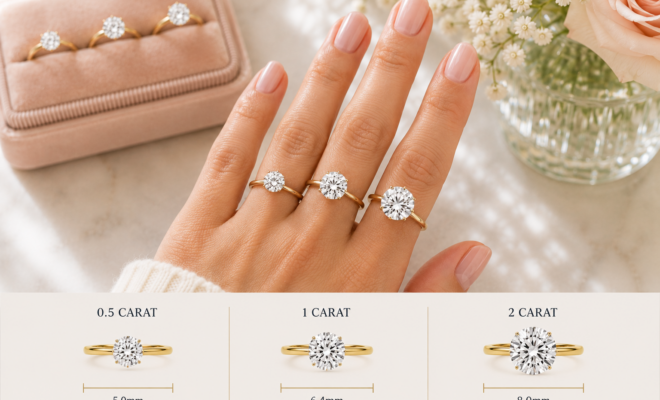
When comparing round stones, using a diamond carat size chart can provide a more visual reference by showing approximate measurements alongside different carat weights.
It is useful to think of carat as one piece of information rather than a direct description of how big the diamond will look.
What Does a 0.5ct Diamond Look Like?
A half-carat diamond can create a relatively understated appearance while still being substantial enough to form a clear focal point.
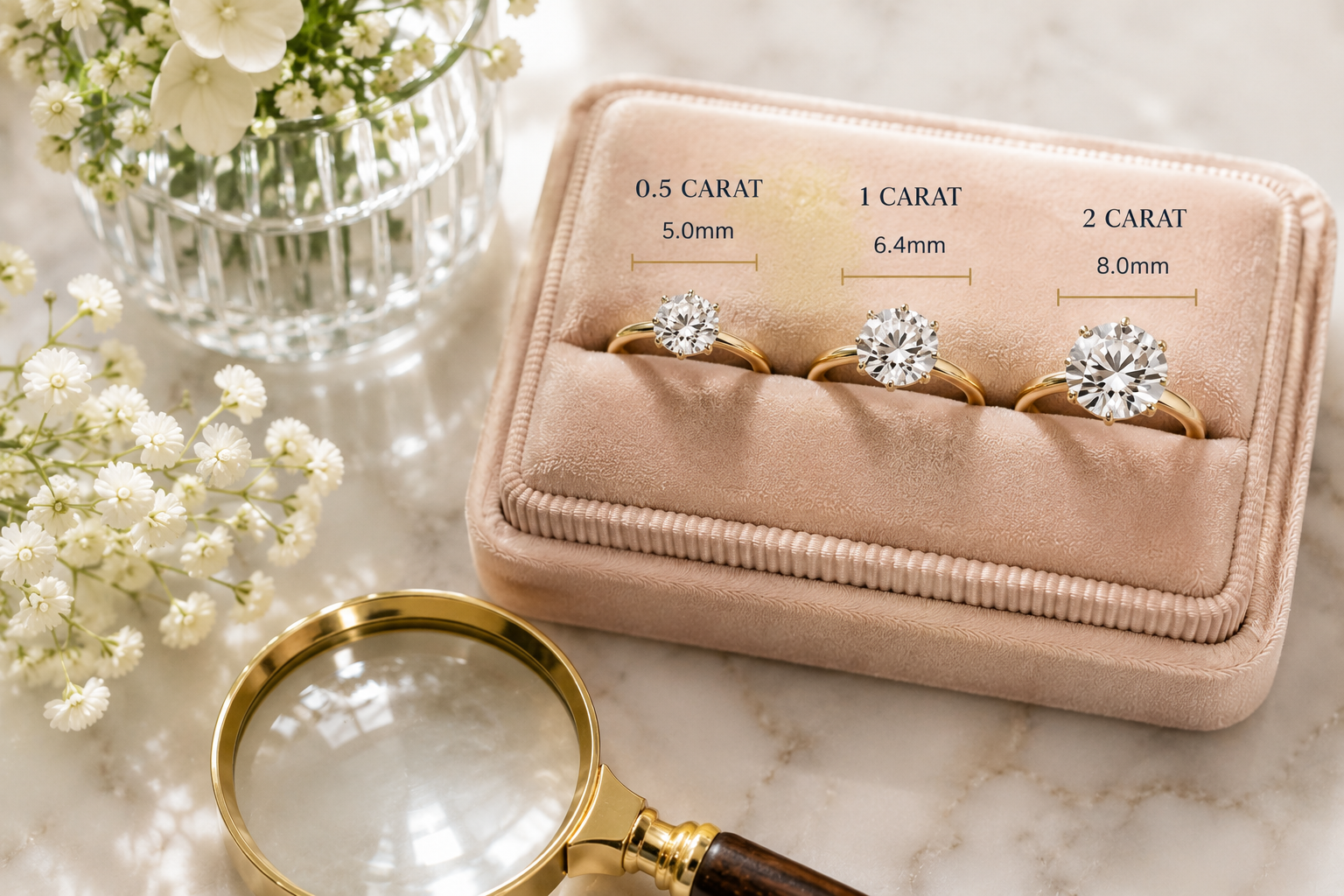
For a round brilliant diamond, 0.5ct is typically around 5mm across, although exact measurements can vary according to the proportions of an individual stone.
Its appearance also depends heavily on the setting. A fine band can make the centre stone appear more prominent, while a wider or more decorative band changes the overall visual balance.
For someone who prefers jewellery that feels subtle and easy to wear every day, the half-carat range can be particularly appealing.
What Changes at 1ct?
One carat is perhaps one of the most familiar reference points when people begin researching engagement rings.
A well-proportioned round one-carat diamond is generally around 6.4mm to 6.5mm in diameter. That does not make it twice as wide as a half-carat stone, despite being twice the weight.
This happens because the additional diamond material is distributed across three dimensions. Some of the increased weight contributes to the depth of the stone rather than simply expanding its visible surface.
On the finger, however, moving from approximately 5mm to around 6.5mm can still create a noticeable visual difference.
And What About 2ct?
A two-carat round diamond typically moves towards approximately 8mm in diameter, depending on its exact proportions.
Again, doubling the carat weight from 1ct to 2ct does not double the visible width. Instead, the increase is more gradual.
That is why judging diamonds solely by carat numbers can be misleading. Looking at actual millimetre measurements provides a much clearer idea of how much finger coverage a particular stone may offer.
At this size, the diamond can become a much more dominant element of the overall ring design, making the relationship between the centre stone, band and setting increasingly important.
Shape Can Change the Impression of Size
Carat weight becomes even more interesting once you move beyond round diamonds.
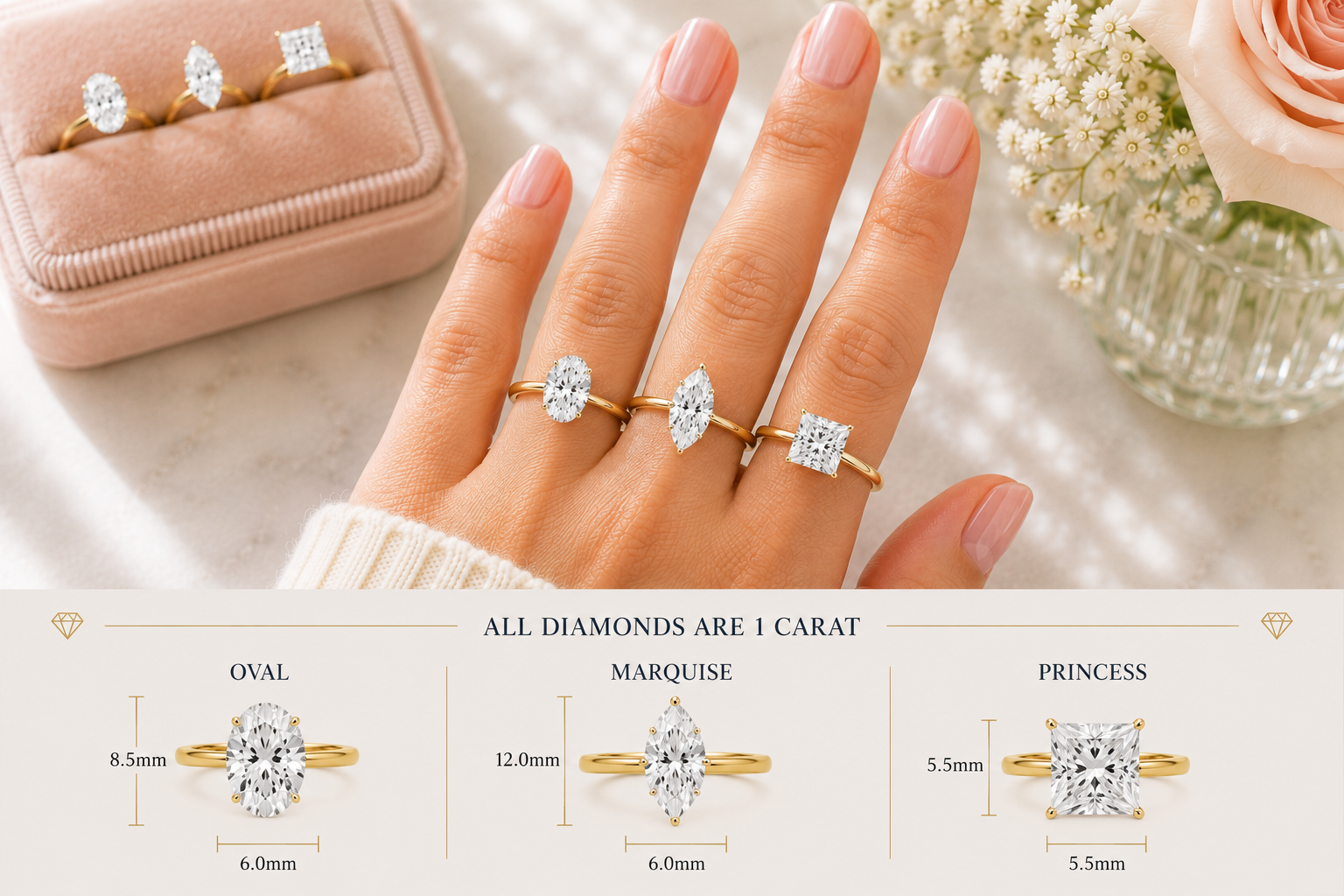
Oval, pear, marquise, emerald and other elongated cuts can create a different visual impression from a round stone of an equivalent weight. Their length can make them appear larger across the finger, even though the actual weight remains the same.
Other shapes distribute their weight differently, potentially creating a more compact appearance when viewed from above.
This is one reason why it can be useful to compare dimensions as well as carat weight when deciding between shapes.
Compare Diamonds Visually, Not Just Numerically
Carat weights are useful for narrowing down options, but they should not be treated like clothing sizes where moving from one number to another creates a predictable visual change.
A 0.5ct, 1ct and 2ct diamond each creates a noticeably different impression, yet the difference is influenced by much more than weight alone.
Look at millimetre dimensions, compare different shapes and consider the setting in which the stone will ultimately sit. Most importantly, think about how the complete ring looks on the hand.
The best diamond is not necessarily the one with the biggest number attached to it. It is the one whose proportions, appearance and style feel right when you actually see it.





You must be logged in to post a comment Login