

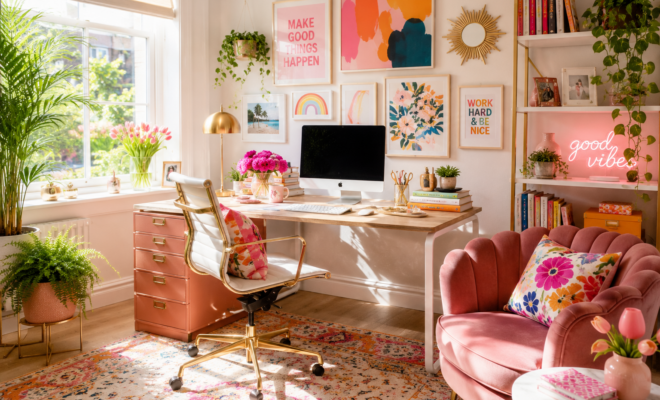
Forget the Flat-Pack Office: Creating a Workspace with Personality
The home office has spent years trying to look like an office. Matching desk and shelving unit. Black swivel chair. White walls. Perhaps a carefully positioned plant to make everything feel slightly less corporate.
It works, but it can also make one of the most-used rooms in the house feel strangely impersonal.
As working from home becomes an established part of everyday life for many people, there is a good argument for treating the workspace more like any other room. Instead of furnishing it entirely around practicality, why not give it the same character you would a living room, bedroom or dining space?
Choose a Desk That Does More Than Hold a Laptop
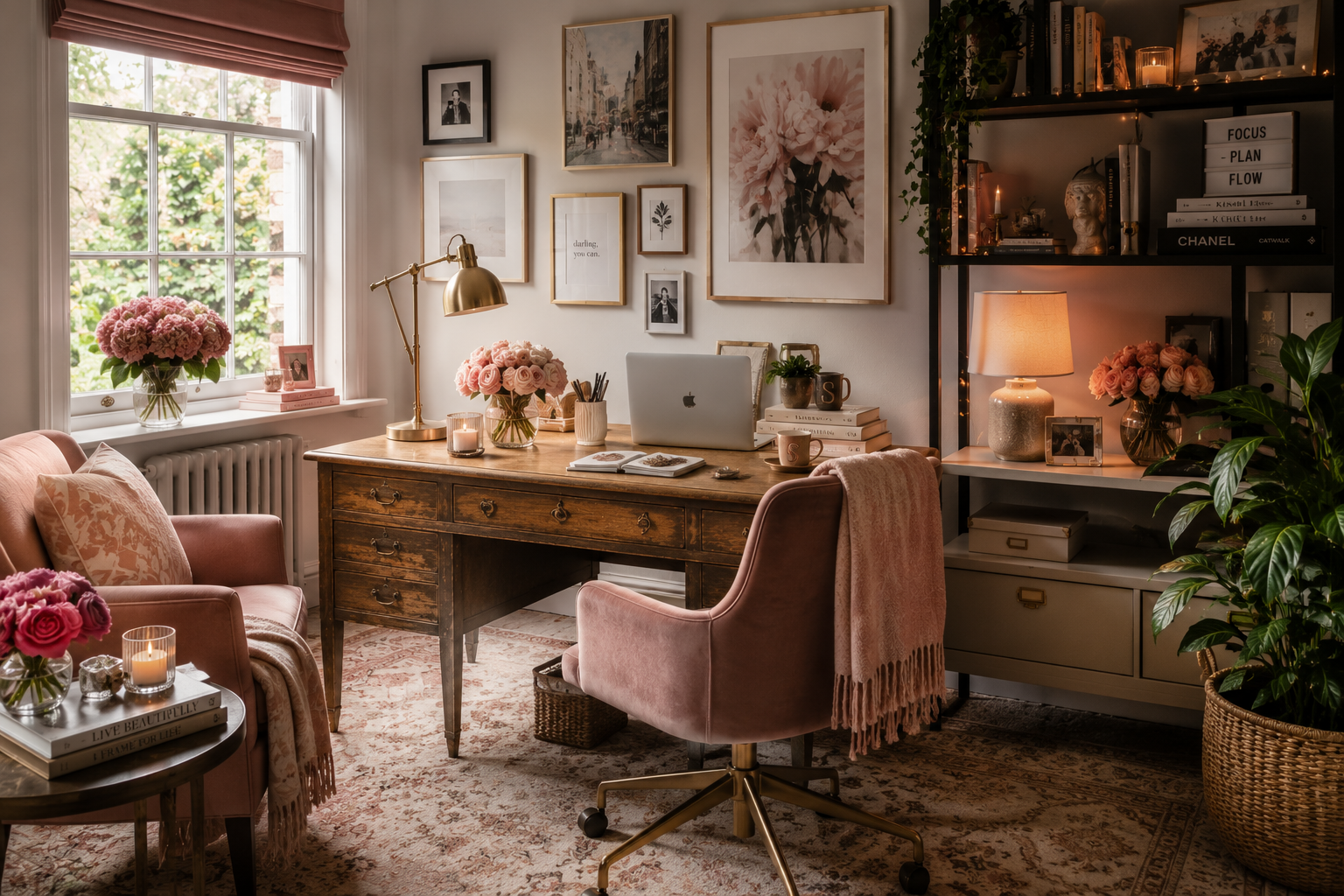
The desk naturally becomes the focal point of most home offices, which makes it an obvious place to introduce some personality. Instead of automatically choosing a conventional modern workstation, consider furniture with a history. Traditional writing tables, partners’ desks and other antique desks can introduce aged timber, distinctive proportions and craftsmanship that would be difficult to replicate with standard office furniture.
The contrast can work particularly well in a modern interior. An older wooden desk alongside contemporary lighting, technology and artwork creates a room that feels deliberately put together rather than purchased as a matching set.
Practicality still matters, of course. Check the height, legroom and available surface area before choosing any desk, particularly if you regularly use multiple monitors or other equipment.
Mix Furniture Rather Than Matching Everything
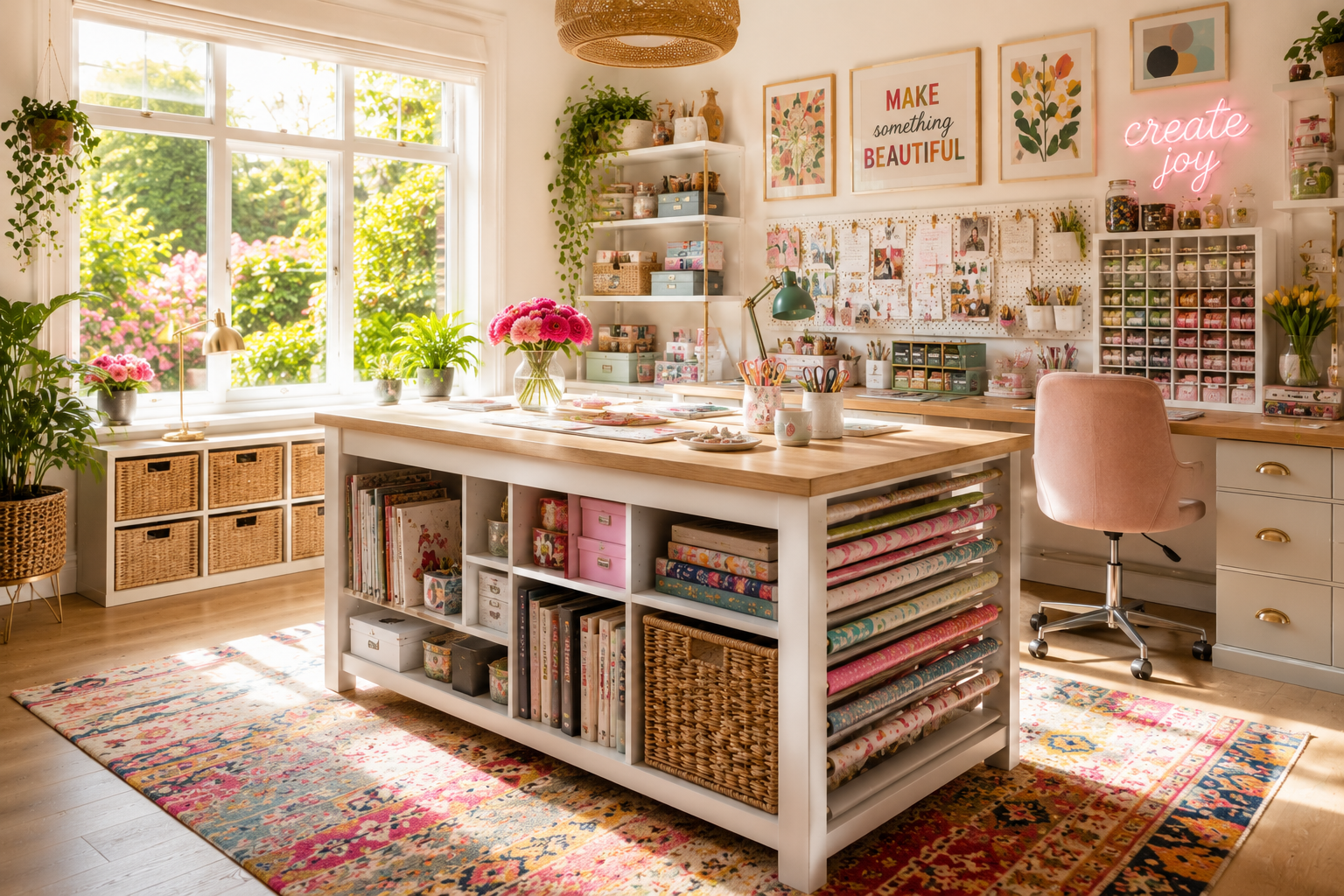
One of the easiest ways to make a home office feel generic is to buy every piece from the same furniture range. Rooms with personality tend to develop through a mixture of materials, ages and styles. A vintage cabinet might sit beside modern shelving, while an old desk could be paired with a contemporary ergonomic chair.
The goal is not to create deliberate mismatches everywhere. Instead, look for connections between pieces. Similar timber tones, repeated shapes or a consistent colour palette can make very different furniture feel as though it belongs together.
This approach also gives the room space to evolve. You can add interesting pieces as you find them rather than feeling that the entire office has to be completed in a weekend.
Put Something Interesting Behind the Screen
When so much of the working day involves looking at a computer, the surrounding view deserves some attention. Artwork can immediately change the atmosphere of a workspace. Rather than generic motivational prints, choose something you would genuinely hang elsewhere in your home. Photography, paintings, maps, illustrations and framed prints can all make the room feel more personal.
Objects collected from travels, books connected to your interests or pieces inherited from family can have the same effect.
Your workspace should provide some visual interest when you finally look away from the screen.
Think Beyond Traditional Office Lighting
Bright overhead lighting may be practical, but relying on it exclusively can leave a workspace feeling clinical. Layering lighting creates a softer and more adaptable environment. A task lamp provides focused illumination at the desk, while a floor lamp or table lamp can make the room feel warmer later in the day.
The light fixture itself is another opportunity to introduce character. An unusual vintage lamp, sculptural contemporary design or colourful shade can become a decorative feature rather than simply a functional necessity.
Natural light deserves consideration too. Where possible, positioning the workspace close to a window can make the room feel more open and provide a welcome visual break during the day.
Allow the Room to Look Lived In
Perfectly styled home offices look impressive in photographs but can be difficult to maintain when someone actually works in them. A stack of books, a notebook left open or a collection of pens does not automatically equal clutter. These signs of use can help a workspace feel comfortable and personal.
The trick is distinguishing between useful objects and unnecessary accumulation. Give frequently used items an obvious home and periodically remove anything that has quietly migrated onto the desk without a purpose.
Personality does not require disorder, but neither does a productive workspace have to look like a showroom.
Build a Workspace You Actually Want to Use
Creating an interesting home office does not require abandoning practicality. A comfortable chair, suitable desk height, good lighting and adequate storage should still form the foundation of the room. Personality comes from what happens around those essentials.
Mix old and new furniture. Display things that mean something to you. Choose artwork because you enjoy looking at it rather than because it says something vaguely inspirational about productivity.
A home office should ultimately feel like part of your home. Once you stop trying to recreate a conventional workplace, there is much more freedom to create somewhere you genuinely enjoy spending time.






You must be logged in to post a comment Login